Most slab leak insurance claims in Texas hinge on whether the damage is “sudden and accidental” or “gradual.” For homeowners, the repair is expensive, the disruption is real, and the question remains: will my insurance cover this?
The honest answer is that it depends on a single distinction that your insurance company will scrutinize closely. Understanding that distinction and correctly documenting your loss separates an approved claim from a denied one.
This guide explains the sudden-versus-gradual rule carriers use, as well as the evidence that can flip the outcome in your favor.
Here is the heart of every slab leak insurance claim in DFW. Standard homeowners policies in Texas cover damage that is sudden and accidental. They exclude damage from long-term, gradual processes: seepage over weeks, months, or years, wear and tear, or lack of maintenance.
The Texas Department of Insurance notes that homeowners policies generally cover sudden and accidental water damage while excluding gradual problems and maintenance issues.
This distinction is the basis for most denials of slab leak claims. A carrier may argue that the leak was gradual, that the pipe deteriorated slowly, and that the homeowner should have caught it.
The frustrating reality is that the same leak can be characterized either way depending on documentation, which is why professional documentation matters.
Coverage varies depending on whether the policy covers foundation repairs or only plumbing. Movement of the foundation due to soil conditions is often excluded. Reading your policy language or having a professional interpret the loss is essential.
If the outcome hinges on sudden versus gradual, documentation decides it. The most important takeaway for homeowners facing insurance claims and slab leaks is this: a properly documented loss by a licensed plumber is your strongest asset in securing fair coverage.
A hydrostatic test is a valuable diagnostic tool in slab leak claims. The plumber isolates your home’s drain system, fills it with water to a set level, and monitors whether the level holds. If it drops, it confirms a leak in the under-slab drainage and helps determine its location.
That test result is the kind of evidence an adjuster needs. It moves the conversation from assumption to fact. Professional leak detection and testing produce documentation that substantiates your claim.
Beyond the test, the plumber’s written findings carry great weight for carriers. A strong report states what failed, documents damage with dated photos, and describes the failure to reflect whether it was sudden. Because the same leak can be framed as sudden or gradual, having a licensed professional promptly document the cause of loss often tips a claim toward approval.
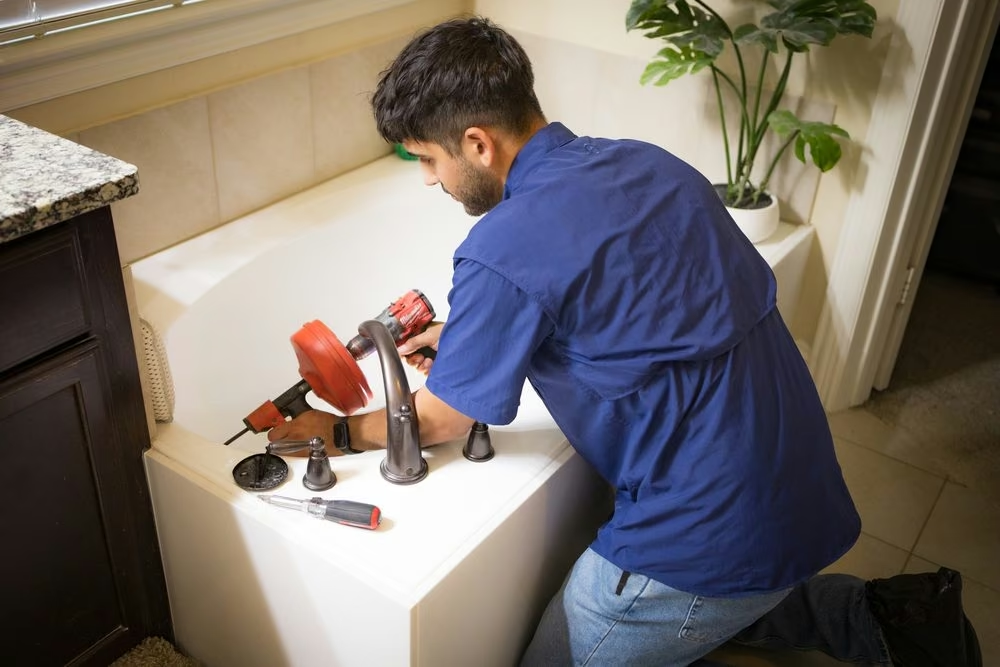
Kelli Gorton discovered a hot-water slab leak, an urgent type because escaping heated water can damage flooring and quickly increase costs. Locating a slab leak demands persistence and skill. The team stayed on it until the source was found and documented.
Kelli wrote:
“These guys worked so hard on getting to the leak. They were determined to get the job done, and they did a great job making sure my wood floors were covered, then went out of their way to clean everything afterward. It’s hard to find a company that has dedicated guys like them.”
Read Kelli’s full Google review.
The result was a fully resolved hot water slab leak and a homeowner who felt genuinely cared for. That blend of technical expertise, determination, and transparency produces the thorough documentation on which a strong insurance claim depends.
Slab leaks are not bad luck. They result from the geology. Much of North Texas has expansive clay soil that swells when it absorbs moisture and shrinks as it dries. The Dallas-Fort Worth area’s cycle of heavy rains followed by long, hot, dry stretches causes constant expansion and contraction.
That movement is hard on the rigid water and drain lines beneath your concrete foundation. Over time, shifting soil stresses pipe joints and connections, and the slab can crack. Texas A&M AgriLife explains that expansive clay soils shift, and moisture changes stress foundations statewide.
This is why slab leak detection is technical. Soil dynamics, concrete, and concealed plumbing interact. Pinpointing a leak without unnecessary demolition requires specialized expertise.
Slab leaks demand both technical skill and an understanding of how insurance claims work, and Herndon McFarland Plumbing brings both. We have served Farmers Branch, Addison, and the surrounding DFW communities since 1995, with over 100 years of combined experience.
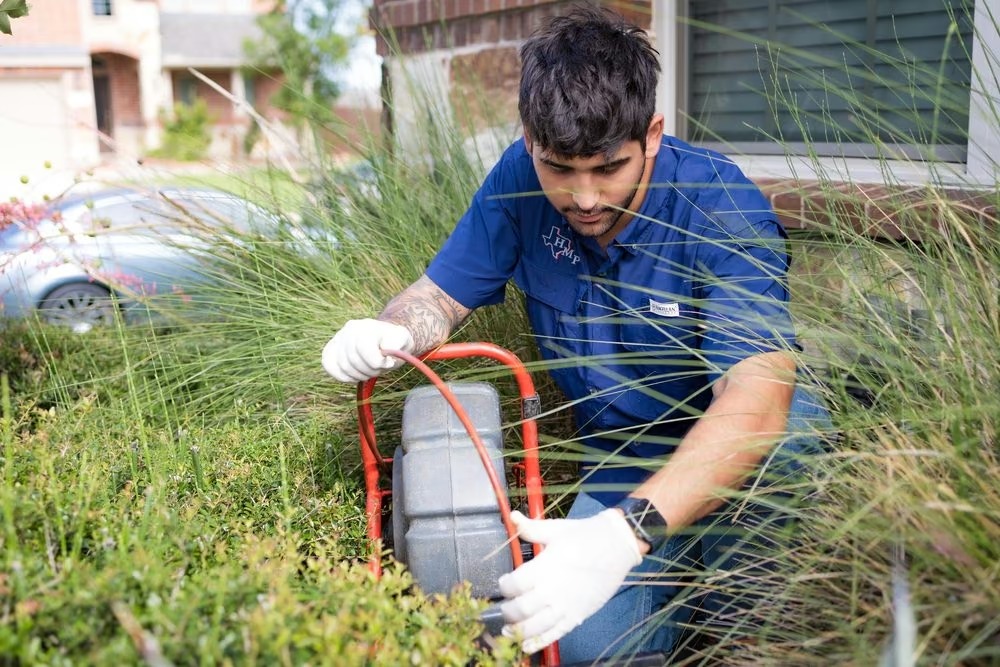
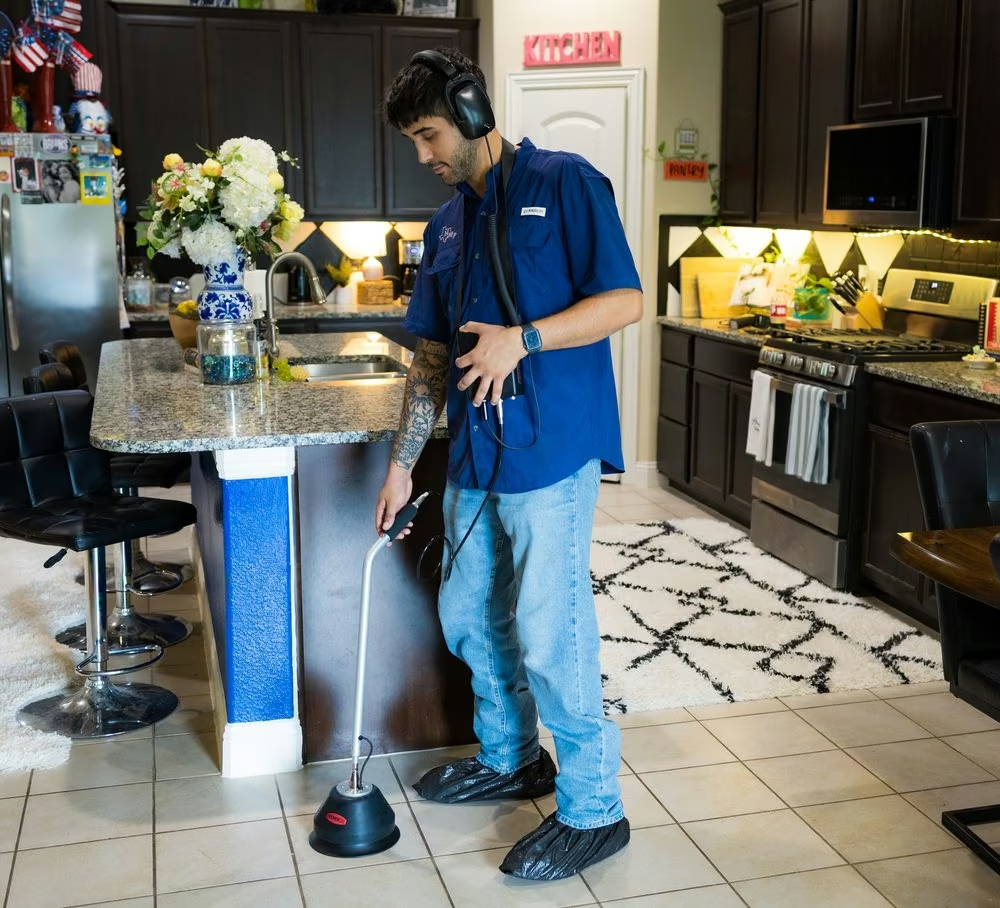
We are fully licensed, insured, and bonded, and we use electronic line tracing, acoustic listening equipment, hydrostatic testing, and isolation testing to precisely locate slab leaks. We provide adjuster assistance and document reports to the standard that insurance carriers require, providing you with evidence to support a fair claim.
Schedule your leak inspection online today.
Often, yes. If the leak is sudden and accidental, many Texas policies cover access to and repair of the slab, as well as any resulting water damage. Gradual leaks, corrosion, and the pipe itself are commonly excluded.
The most common reason is the carrier judging the damage “gradual,” caused by long-term seepage, wear, or lack of maintenance, rather than sudden and accidental.
It is a test that fills and monitors your home’s drain system to confirm an under-slab leak. The result provides objective evidence that supports your insurance claim.
This varies by policy. Many cover breaking through and repairing the slab to reach the leak, but foundation movement tied to soil conditions is frequently excluded.
Act immediately. Prompt diagnosis limits damage, counters any claim that the leak was gradual, and strengthens your home’s safety and insurance position.
Skip the guesswork. Get an honest answer from a licensed North Dallas team.